

Most runners sign up for a race because someone they know is going. So the fastest way to get more sign-ups is to make every runner you already have bring a friend. Then fix the three things that quietly cost you runners: a race page that leaves questions unanswered, no reason to sign up today, and nobody following up with the people who said "maybe." Promotion helps too, but it works best after those are in place.
Why aren't runners signing up for my race?
When sign-ups are slow, it is usually one of these:
They haven't heard of it. Your race only reaches people you already know.
The race page doesn't answer their questions. No start time, no course map, no word on parking. People leave to "check later" and never come back.
There is no reason to sign up today. If the price is the same on race morning, many people wait.
They meant to, and forgot. A runner who saw your race once and moved on is a lost sign-up unless something reminds them.
Nobody they know is going. Running a race alone is a harder yes than running it with a friend.
The good news: every one of these can be fixed, and most of the fixes are free.
How do I get runners to bring their friends?
Word of mouth is the strongest marketing a race has. A runner trusts a friend's "I signed up, come with me" more than any ad.
Make it easy for that to happen:
Ask out loud. In your confirmation email and on social media, say it plainly: "Know someone who should run this? Send them the link."
Give runners a reason to recruit. A group or family price, or a friend code, turns one sign-up into three.
Make teams a thing. A team, club or office challenge gives people a reason to round up coworkers and friends.
Celebrate the people coming. A post that says "Look who's running this year" makes the race feel like the place to be.
On Run This, this part happens on its own. Runners on Run This follow each other. When someone registers for your race, it shows up in their followers' feeds, and the friends who marked them as a favorite get a push the moment they sign up. Every race page has a Start Line that shows who is registered, with the people a runner follows marked. Your runners spread the word just by signing up. That is why Run This was started: to make it easy to see which races your friends are running.
What should my race page say?
Your race page is where a "maybe" turns into a "yes," or into "I'll look at this later." Before you promote anything, make sure it answers:
When: the date and the start time for each distance.
Where: the start location, parking and where to go when you arrive.
The course: a map, and whether it is flat, hilly, road or trail.
The distances: and whether walkers, strollers and kids are welcome.
The price: and when it goes up.
What's included: a shirt, a medal, timing, food after.
Packet pickup: when and where.
The cause: if the race raises money, who it helps.
Refunds and transfers: what happens if someone can't come.
Add a few good photos from past years if you have them. A page that looks real feels like a race worth signing up for.
On Run This, all of this has a place: info sections for the schedule, parking, FAQ and awards, a course map you draw on the page, and photos. The price on your page always includes the fee, so the number a runner sees is the number they pay.
Should I use early-bird pricing?
Yes. A price step gives people a reason to sign up now instead of "sometime." A common setup is an early-bird price, a regular price, and a higher price for the final week or race day. Put the date of each increase on your race page, and remind people a couple of days before it happens.
On Run This, you set a price schedule once and the steps happen on their own. Your race page shows when the next price starts. About 48 hours before each increase, everyone who saved your race gets a heads-up to register before it changes.
For more on picking the numbers, see How Much Should I Charge for a 5K?
How do I turn "maybe" into registered?
Most runners don't register the first time they see your race. They think about it, check with a friend, and forget. Following up with the maybes is one of the easiest wins you have.
On Run This, a runner who isn't ready taps Save. Then Run This follows up for you:
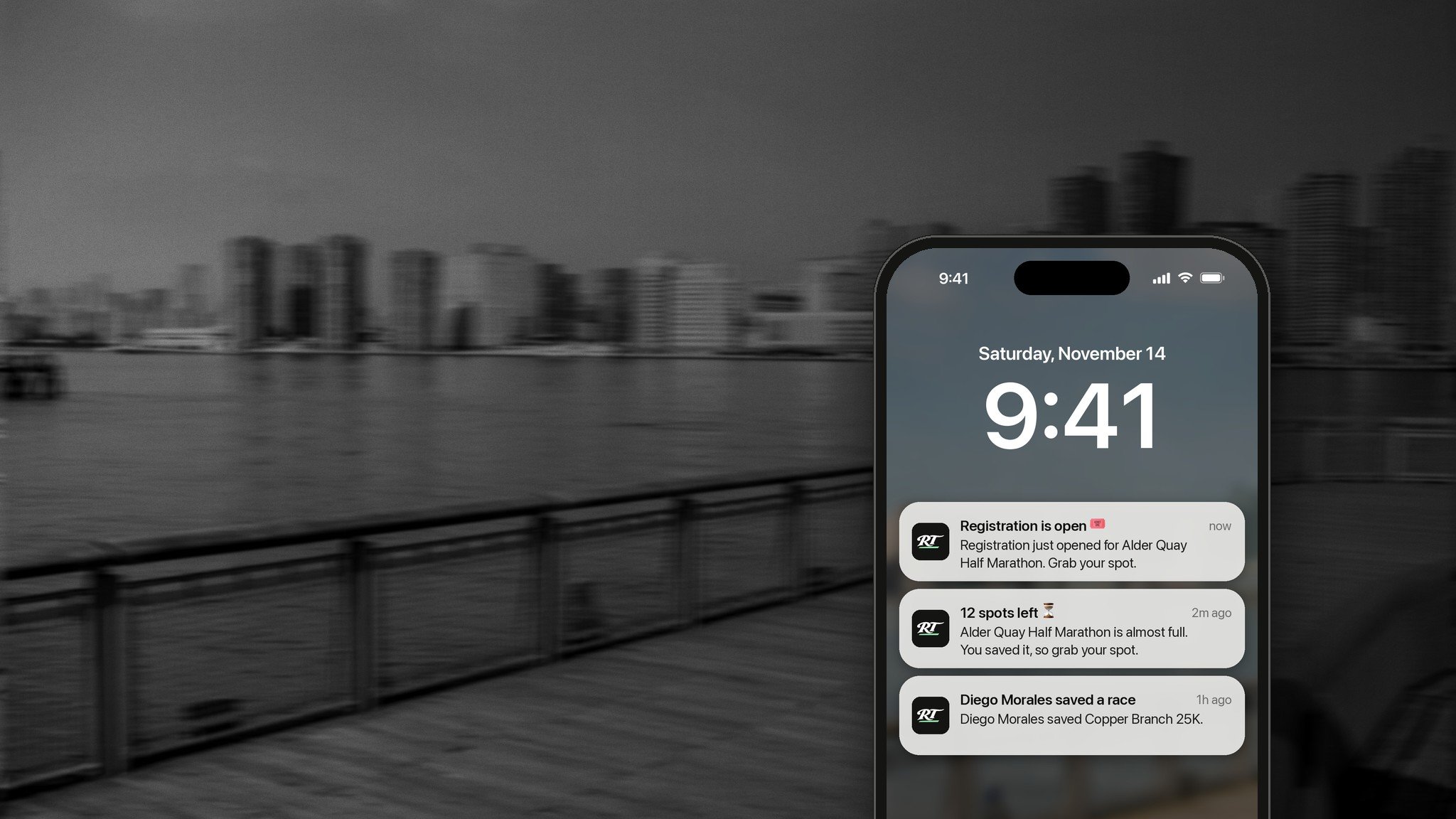
When registration opens, everyone who saved your race hears about it.
Before a price increase, they get a heads-up about 48 hours ahead.
When you're almost full, they get one more nudge while spots are left.
Four weeks out, anyone who still hasn't signed up gets a reminder.
Your announcements reach them too. Post the shirt design, the course or a new sponsor, and it lands as a push on the phones of everyone registered or saved.
You can also email the people who saved your race. And anyone who starts registering and doesn't finish gets a reminder email to come back. That one is on by default. More in Saved Races: How Run This Turns Maybe Into Registered.
Where should I promote my race?
Start close to home, then widen out. In a 2025 study of race organizers, Running USA found the best-performing marketing channels were direct email, paid social media and community outreach.
Email: your past runners, your volunteers and your cause's supporters. More on that below.
Running clubs and stores: ask to post in the club chat, leave flyers and offer a club discount code.
Schools, gyms, churches and workplaces: anywhere a group might run together.
Local calendars: your city's events calendar, the local paper and community groups.
Race calendars: list your race where runners search for races near them.
Your own website: link straight to your registration page.
Paid social: a small, local ad aimed at runners near your race can work well in the last few weeks.
Some of this is built into Run This. Your race is listed on Run This's race pages for your city and state, where runners near you search. Clubs can pin your race to their club page. You can put a live Register button, with today's price and spots left, on your own website with one pasted line. And from your dashboard you can pay to feature your race on Run This, boost it on Facebook and Instagram, or send a push to Run This runners who live near it.
How do I bring back last year's runners?
Your past runners are the easiest sign-ups you will ever get. They already know the race and liked it enough to finish.
Email them first, before you promote to anyone new. Give them an early price or a returning-runner code.
Post race photos. Free photos with your race logo get shared for weeks, and every share is an ad for next year.
Remind them of the date as soon as you set it.
On Run This, past participants are an email audience you can pick in one click, and you can see who is coming back this year. See The Run This CRM and Race Photos That Bring Runners Back Next Year.
How do I know what's working?
Ask, and track.
Ask at sign-up: "How did you hear about this race?"
Give each partner its own code: one code for the running club, another for the gym. The number of uses tells you which one brought runners.
Watch your sign-ups by day. A jump the day after a club shout-out tells you something.
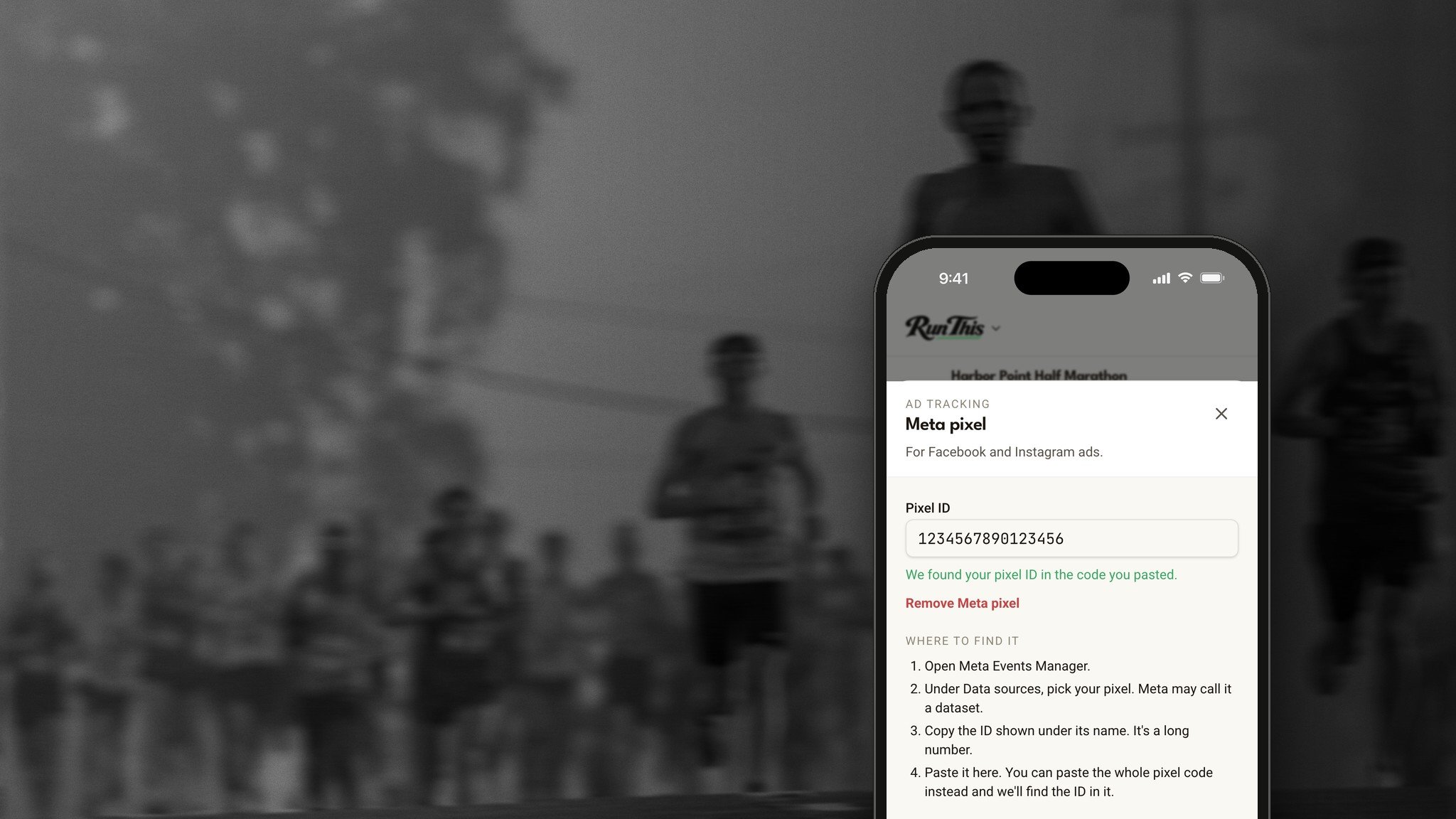
On Run This, "How did you hear about this event?" is a built-in registration question, the Traffic sources card in Charts and insights shows where your visits came from, and every coupon code counts its own uses, link clicks and QR scans. If you run ads, you can add your own Meta pixel or Google Analytics to see which ads lead to sign-ups.
When do most runners sign up?
Later than you'd like. Many runners wait until the last few weeks, especially for a 5K. Slow sign-ups a month out are normal, so don't panic, and don't cut your price. Save your biggest push for the final weeks, and use your price steps and reminders to pull some of those late sign-ups earlier.
A checklist to get more sign-ups
Race page answers date, start time, location, parking, course, price, what's included and refunds
Price steps set, with the dates on the page
Confirmation email asks runners to bring a friend
Group, team or friend discount ready
Past runners emailed first
Flyers and codes out to clubs, stores and gyms
Race listed on local and online race calendars
Reminders on for runners who saved the race or didn't finish signing up
"How did you hear about this race?" asked at sign-up
A final push planned for the last two weeks
Why put your race on Run This?
Most of this list is work you do by hand. On Run This, the biggest piece is built in. Run This is built around runners and their friends. When someone registers for your race, it shows up in their followers' feeds, and the friends who marked them as a favorite get a push. Your announcements can reach everyone who registered or saved your race as a push notification. Runners sign up in a few taps in the free Run This app for iPhone and Android, with Apple Pay, Google Pay or a card. On race day you check runners in from a phone with Run This Check In, time the race with the free Stopwatch or bring your timing company, and post results on your race page. Free races are free. On a paid race, runners pay about 5% + $1 per registration and you keep 100% of your price. Start your race on Run This.
Frequently asked questions
How early should I start promoting my race?
Open registration and start telling people as soon as your date, course and price are set, often three to four months out for a 5K. Then plan your bigger pushes around your price increases and the last two weeks.
Should I lower my price if sign-ups are slow?
Usually not. Dropping the price is unfair to the people who already paid, and it teaches runners to wait. Use a targeted discount code for a club or group instead.
Do I need to pay for ads?
No. Many small races fill with word of mouth, email and local outreach. A small paid social ad near the end can help a race that needs a final push.
What is the best way to get a runner's friends to sign up?
Make it visible and easy. On Run This, a runner's sign-up shows up in their followers' feeds, so their friends see it without anyone having to ask.