

To start a run club, pick one day, one time and one meeting spot, plan a route with a short and a long option, and promise that nobody gets left behind. Invite a few friends to the first run, post the schedule in one place people can find, and then show up every single week, even when only two people come. Consistency is what turns a group run into a club. Once people keep coming, add the extras: a chat, shirts, a coffee stop, maybe dues.
How do I start a run club?
Pick a day, a time and a place. A weekday evening or a weekend morning works for most people. Meet somewhere with parking and a bathroom: a park, a running store, a coffee shop or a brewery.
Plan the route. A loop of about 3 miles with an option to add more works for most groups. Keep it on sidewalks or paths, away from busy roads.
Set the pace rule. A no-drop rule means nobody runs alone at the back. Have a leader at the front and someone at the back.
Name it. Something simple people will remember and can search for.
Invite your first members. Friends, coworkers, neighbors, people from your last race.
Post it in one place. The day, the time, the meeting spot and the route. Change it in that one place when plans change.
Show up every week. The first few runs may be small. That's normal.
What makes a run club successful?
People come back when they feel welcome and know what to expect.
The same time and place every week. People build it into their routine.
A welcome for new runners. Learn their names, introduce them to someone at their pace, and tell them where the route goes.
Every pace is welcome. Walkers and new runners too, with a shorter route.
Something after the run. Coffee, breakfast or a drink is where friendships start.
One place for everything. Schedule changes, weather calls and photos in one spot, not spread across texts and social posts.
How do I find members for a run club?
Ask the people you already run with. Two or three regulars are enough to start.
Partner with a local business. A running store, a coffee shop or a brewery is often happy to host, because the club brings them customers.
Run together at local races. A group in matching shirts gets noticed.
Post photos after every run. People join clubs that look like fun.
Make it easy to find. A club page people can search for and share beats a group chat nobody can join.
Do I need insurance to start a run club?
It's worth looking into. A casual group of friends usually doesn't carry insurance, but once you have a name, a schedule and members you don't know, it's smart to protect the organizers. The Road Runners Club of America (RRCA) offers insurance to its member clubs and recommends that clubs incorporate. Talk to an insurance agent or the RRCA about what fits your club.
How do I keep a run club safe?
Pick routes with sidewalks, paths and lights. Avoid busy roads, especially after dark.
Wear reflective gear at night and early in the morning.
Run with a sweep so nobody is left alone.
Know where you are. Share the route before the run so people can find their way back.
Have a weather rule. Decide when you'll cancel for heat, lightning or ice, and post it early.
Are run clubs profitable?
Most aren't meant to be. Many clubs are free to join. Others charge small yearly dues, often around $20 to $35, to cover shirts, insurance and events. Clubs that bring in more money usually do it with:
Dues for members.
Sponsors, like a running store or a local business.
Merchandise, like shirts, hats and stickers.
Races. A club that puts on its own 5K can raise money for the club or a cause. See Can a 5K Make Money?
What's the first rule of run club?
Show up. The club exists because people know it'll be there every week. After that: nobody gets left behind, every pace is welcome, and you say hello to the new person.
How does Run This help a run club?
Run This is a running network with clubs built in: your club's runs, posts, chats and races in one place, on the website and in the app. When members sign up for a race, it shows in their followers' feeds, so the club's plans travel.
A club page you build yourself, with writing, photos, a video, a weekly schedule, questions and answers, links, sponsors, a countdown and your next runs.
Club runs with RSVPs. Set up a weekly run once, or a monthly social, and it repeats. Members tap I'll be there, see who else is going, and the date lands on their calendar. Move or cancel a date and everyone who said they'd come gets a notification.
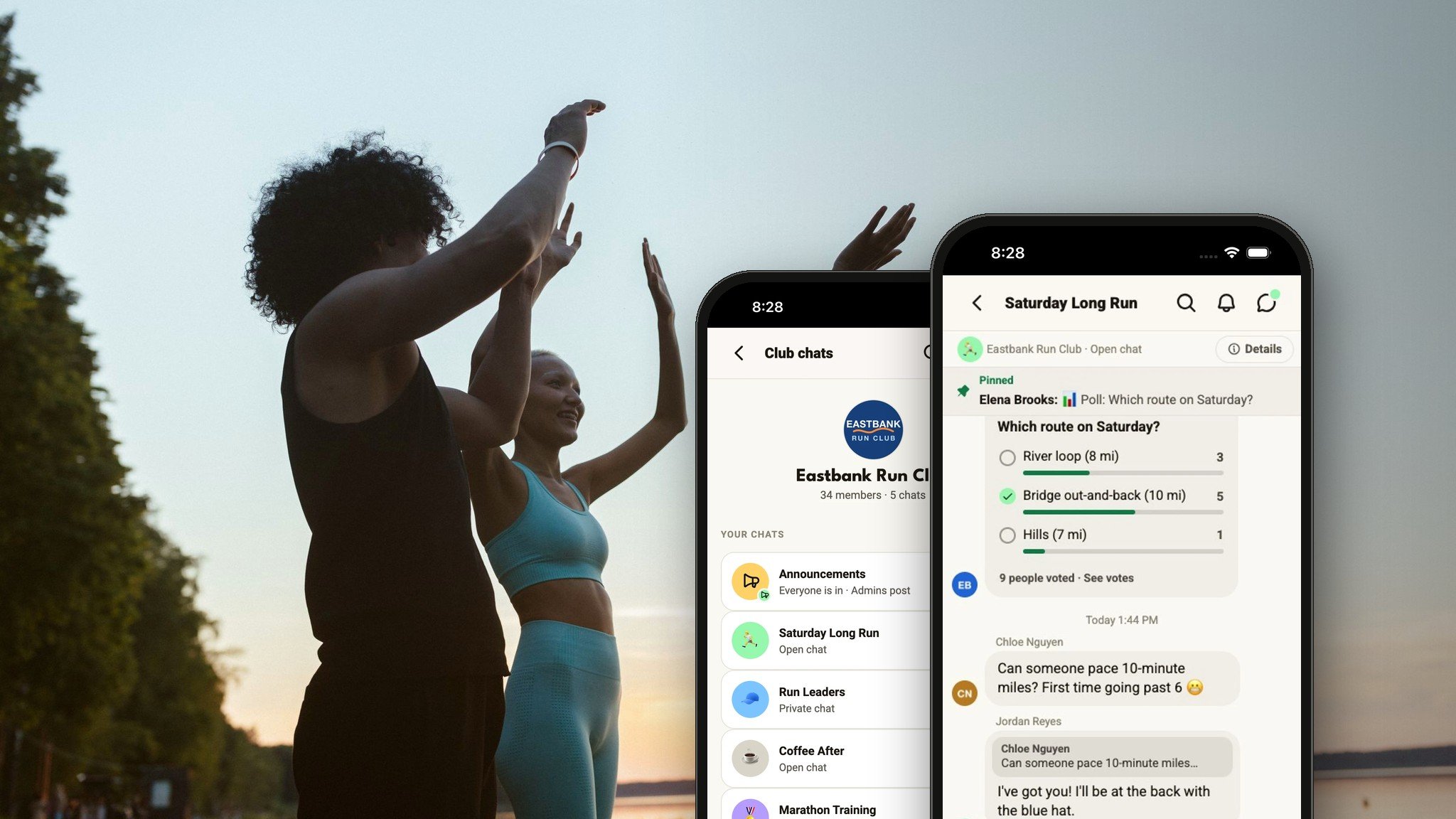
Posts and club chats. Every new post notifies members, and each member picks what pings them. Chats can be open to everyone or private to a group, like your pacers. See Club Chats on Run This.
The races your members are running. The club page shows upcoming races your members have registered for, saved or said they'll be at, so you can turn up together.
Optional dues and a club shop. Take dues with automatic renewal, sell shirts and hats with pickup codes, and make coupons. Taking money is optional: a club works fully without it.
Email your members from the club dashboard on the website.
Host your own race. Connect your club's race to your club and it shows a Hosted by badge and lists under your club.
In the Run This app, the This week row at the top of the Events tab shows members the next seven days of club runs, next to their own races.
There's no charge to start a club: tap Start a club on the Clubs page. Start your club on Run This.
Frequently asked questions
How many people do you need to start a run club?
Two or three regulars is enough. Most clubs start small and grow as members bring friends.
How much does it cost to start a run club?
Very little. You need a meeting spot, a route and a way to tell people about it. Insurance, shirts and a website can come later.
Should a run club charge dues?
Only if you have costs to cover, like insurance, shirts or events. Many clubs start free and add small yearly dues later.
How long should a club run be?
A loop of about 3 miles, with options to add distance, works for most groups. Many clubs offer a shorter route for walkers and new runners.
How do I name a run club?
Use your town, your neighborhood, your meeting spot or your day of the week. Keep it short and easy to search for.